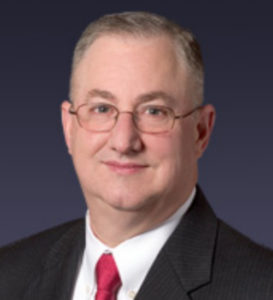
Arnold Punaro is chief executive officer of The Punaro Group, LLC, a Washington-based firm he founded in 2010 specializing in federal budget and market analysis, business strategy and capture, acquisition due diligence, government relations, communications, sensitive operations, business risk analysis and compliance, and crisis management. He consults for a broad array of Fortune 100 companies and has been recognized by Defense News as one of the 100 most influential individuals in U.S. Defense. He also leads Punaro Capital, LLC, a firm specializing in national security investments, and Punaro Press, LLC, a company that specializes in national security publications.
In November 2015, Mr. Punaro completed a four-year term, first as Vice-Chairman, then as Chairman of the National Defense Industrial Association, the country’s largest defense industry association with over 1,600 corporate and nearly 70,000 individual members. As NDIA Chairman Emeritus, he served as Chair of the Nominating and Governance Committee from 2015 to 2018. He began a new two-year term as Vice-Chairman in October 2018 and another two-year term as Chairman beginning in October 2020.
Prior to his current role, Mr. Puraro has served in many distinguished positions in DOD policy boards, commissions and in public companies. His service includes: Various Sr. roles including Vice-Chairman, then as Chairman of the National Defense Industrial Association (2011-2020); Vice Chairman of the Reserve Forces Policy Board (2011-present), Member of the Defense Business Board (2002-2013, 2015 to present), Chairman of the Independent Commission on the National Guard and Reserves (2005-2008), a task force member for the U.S. Special Envoy for Middle East Regional Security (2008), a Commissioner on the Independent Commission on the Iraqi Security Force (2007), Deputy Executive Director of the U.S. Commission on National Security/21st Century (1998 to 2001), and Chairman of the Defense Reform Task Force for Secretary of Defense William Cohen (1997), and Executive Vice President at Science Applications International Corporation (SAIC) from 1997 to 2010 as a sector manager, deputy president of the Federal Business Segment, and led SAIC’s Corporate Business Development organization.
From 1973 to 1997, Mr. Punaro worked for Senator Sam Nunn in national security matters. He served as his director of National Security Affairs and then as Staff Director of the Senate Armed Services Committee (eight years) and Staff Director for the Minority (five years). In his work with Senator Nunn and the Senate Armed Services Committee, he was involved in the formulation of all major defense and intelligence legislation, the oversight and review of all policy and programs, and civilian and military nominations.
A retired U.S. Marine Corps Major General, he served as the Director of the Marine Corps Reserve, Deputy Commanding General, Marine Corps Combat Development Command (Mobilization), and for three years as the Commanding General of the 4th Marine Division. Other assignments were Commanding General, Marine Corps Mobilization Command, and Deputy Commander, Marine Forces Reserve. In December 1990, he was mobilized for Operation Desert Shield. In December 1993, he completed a tour of active duty as Commander of Joint Task Force Provide Promise (Forward) in the former Yugoslavia. He was mobilized for a third time in May 2003 in support of Operation Enduring Freedom and Operation Iraqi Freedom. He served on active duty as an Infantry Platoon Commander in Vietnam where he was awarded the Bronze Star for valor and the Purple Heart.
Mr. Punaro is the recipient of numerous recognitions and awards including the Secretary of Defense “Medal for Distinguished Public Service” and two awards of the Secretary of Defense “Medal for Exceptional Public Service.” He’s been recognized through numerous other awards from the Marine Corps League, Air Force Association, National Guard, Army, Secretary of the Army, Reserve Officer Association, Marine Corps Scholarship Foundation, CAUSE, NDIA, and SAIC as well as the Distinguished Service Medal as well as numerous civic awards.
He has a Masters of Arts degree from the University of Georgia and a Masters of Arts degree from Georgetown University, the latter in national security studies. He was on the Adjunct Faculty of the Walsh School of Foreign Service at Georgetown University for ten years where he taught an annual graduate level course entitled “National Security Decision Making.”
He is the author of the book, On War and Politics: The Battlefield Inside Washington’s Beltway, that was published by the Naval Institute Press in October 2016. He is completing his second book, The Ever-Shrinking Fighting Force, which will be published in 2021.








 Chris Hardgrave joined Quest Defense in April 2024 as Vice President for Strategic Accounts. He is responsible for sales, growth, and development of strategic relationships for new business development efforts in the Aerospace and Defense sector. Chris works in the Washington, D.C. office.

 As Chief Engineer for Quest Defense, Jon is responsible for ensuring that sound engineering processes are maintained and followed by our employees working in a diverse set of services and disciplines across all verticals. In this role he also leads Quest Defense’s efforts to develop new methods and technologies to help grow the business through innovation, as well as building and promoting the technical reputation of the company in the public sphere.
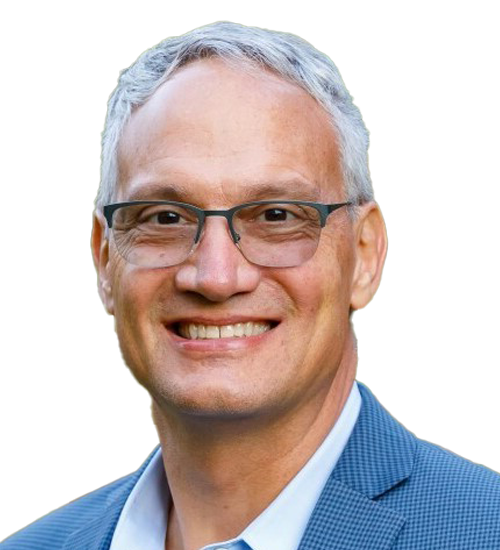 Jeff Fischer serves as a board member for Quest Defense Systems and Solutions business. Additionally Jeff is the Operations Leader for the Quest Global Aerospace and Defense Industry.

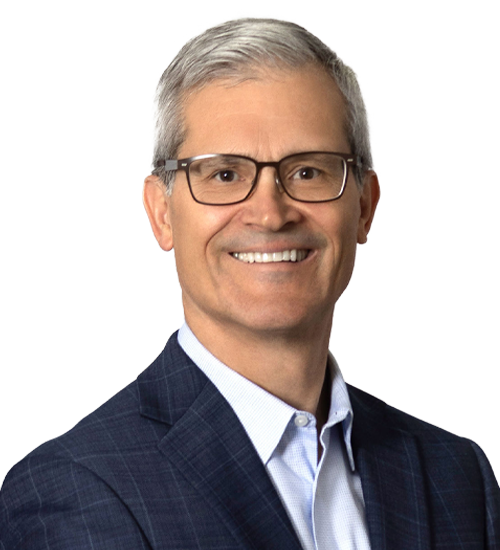 Steve Gerber is President and CEO of QuEST Defense Systems and Solutions business and is responsible for providing the leadership and growth of this venture.
 Joe supports Special Missions across Quest Global to include key client contract negotiations, strategic business solutions, M&A, and culture endeavors.
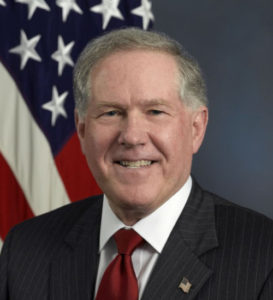 Frank Kendall is an independent consultant to defense industry firms and non profit research organizations. He is a Senior Fellow at the Center for American Progress, a Senior Advisor to the Center for Strategic and International Studies, and a member of th e Council on Foreign Relations. Among other industry positions, he is a member of the board of directors of Leidos Corporation and of Leonardo Electronics USA Inc. From 2012 to 2017, Mr. Kendall served as the Under Secretary of Defense for Acquisition, T echnology and Logistics (AT& after serving as the Principal Deputy Under Secretary from 2010 2012. Mr. Kendall has over 45 years of experience in engineering, management, defense acquisition, and national security affairs in private industry, governmen t, and the military.
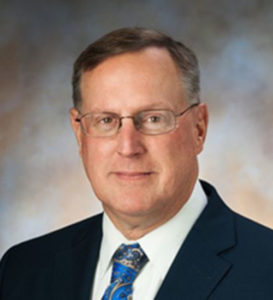 John Thackrah is the founding Principal of Sextant Solutions LLC, an aerospace, maritime and government acquisition consultant.
 Page Hoeper is a private consultant, corporate director, and venture capitalist. Since leaving government service, Mr. Hoeper has focused on corporate governance and board service. He chairs the boards of OnPoint Technologies, Inc., 501c(3) venture capital fund established by Congress to focus on emerging commercial technologies of interest to the U.S. Army, and Quest Defense Systems & Solutions, a provider of engineering services to the U.S. defense industry.
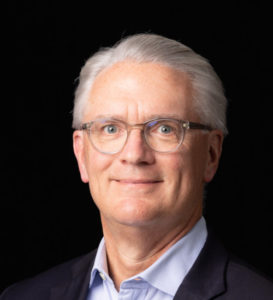 As the President of Quest Global, Bob is responsible for establishing and maintaining senior customer relationships, catalysing new business development, and overseeing innovative and transformational deals. In this role, he also assists in building relationships with strategic acquisitions for the company.